Stephen Irving
Anne of AvonleaStephen Irving is Paul Irving’s father, a businessman who left Avonlea for the United States and a man whose youthful separation from Miss Lavendar Lewis shaped both their lives for twenty-five years. His return brings Paul back into his care and gives the old engagement a second chance: what began in pride, misunderstanding, and silence ends in marriage and a shared departure from the stone house at Grafton.
Identity and Background
Before Stephen returns in person, Avonlea hears about him through other people’s memories and judgments. Rachel Lynde recalls that he left for the United States, entered business with his uncle, and married an American woman. His wife died two years before the conversation, and he sent his ten-year-old son, Paul, to live for a time with his grandmother, Mrs. Irving. Rachel treats the boy’s American upbringing as a reason for suspicion, but Marilla Cuthbert recalls Stephen as the nicest boy raised in the district and expects Paul to be welcome at Avonlea school.
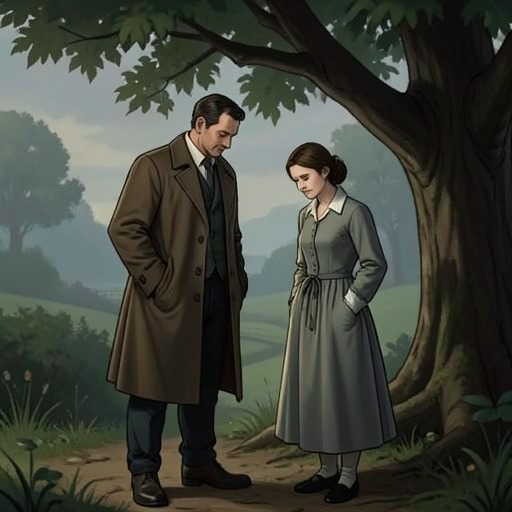
The contrast between gossip and remembered character anticipates the fuller portrait that follows. Anne Shirley initially hears that Stephen jilted Miss Lavendar; she resists that simplified account, understanding that a quarrel had separated them and that blame may have belonged to both. Later, Stephen himself appears as a tall, handsome man of middle age, with iron-gray hair, deep-set dark blue eyes, and a strong, sad face. Anne’s impression of his appearance is colored by the romance she associates with Miss Lavendar’s past, but his conduct toward Paul and Anne supplies a more substantial measure of him: he is affectionate, grateful, and attentive to the people who have cared for his son.
The Engagement and Its Rupture
Stephen and Miss Lavendar’s attachment began in childhood. When he was nine and she was six, he told her in the garden that he had nearly decided to marry her when they grew up. She accepted the declaration with a child’s solemnity and afterward told her mother that she was relieved not to have to worry about becoming an old maid. Their families remained connected, and Miss Lavendar later describes them as having been engaged, in a sense, for much of their lives. Twenty-five years before her account to Anne, they became formally engaged and planned to marry the following spring. Miss Lavendar had even made her wedding dress, though only her mother and Stephen knew of it.
Their separation did not follow from a single grave betrayal. Miss Lavendar remembers only a commonplace quarrel and cannot recall precisely how it began. She says Stephen started it, while also acknowledging that her own foolishness may have provoked him. She had other admirers, enjoyed teasing Stephen, and was vain and coquettish; he was high-strung and sensitive. They parted in anger, and Miss Lavendar expected that they would soon make peace. Instead, Stephen returned before she had stopped sulking. She would not listen or forgive him, and he left for good, too proud to try again.
The estrangement then became self-perpetuating. Miss Lavendar sulked because Stephen did not return, but she could not bring herself to summon him; she was as proud as he was. She says she could never care for another man and would rather remain unmarried than marry anyone else. Her account makes the broken engagement an outcome of ordinary failings—pride, hurt, teasing, and withheld forgiveness—rather than a mystery caused by a decisive catastrophe. Anne’s earlier refusal to repeat the story as a simple jilting is therefore borne out by the fuller history.
Paul and Anne’s Place in the Story
Stephen’s absence is felt most clearly through Paul’s longing for his father. Paul tells Anne that his father understood him, though he found it difficult to become truly acquainted with him until after Paul’s mother died. He loves Stephen above everyone and imagines the two of them living together again once he is grown. Paul also worries that his father is lonely, away on business and left without a family member to raise him; this is why he is living with Mrs. Irving rather than returning to his father immediately.
Paul’s stories give Anne a sense of Stephen before their meeting. She imagines him as reserved, with a deep and tender nature carefully kept from the world, and believes that Paul’s temperament resembles his mother’s. When Paul speaks of his mother, he remembers that his father would cover his face, a sign to the boy that the subject caused him pain. Stephen’s grief is thus conveyed indirectly, through his son’s recollection and his efforts to protect Paul from further distress. The portrait remains Paul’s and Anne’s understanding of him, rather than a full account of Stephen’s private thoughts.
After Paul has spoken often about Miss Lavendar, Stephen learns that his son has visited her with Anne. He asks Anne whether she knows Miss Lavendar well and requests that she find out whether he may visit. Anne recognizes the significance of the question and agrees to carry it. Her friendship with Miss Lavendar makes her a trusted intermediary in the reunion: she knows the history, understands its emotional stakes, and can approach the subject without turning it into village gossip.
Return and Reunion
Stephen’s return first reaches Anne through Paul’s excited announcement that his father has arrived. When Stephen meets her, he warmly shakes her hand and thanks her for what she has done for Paul. He has heard so much about her through Paul’s letters that he feels acquainted with her already. He judges that Anne’s influence has supplied something Paul needed: Mrs. Irving’s practical good sense could not always understand a child with Paul’s imaginative temperament, while Anne has met him on those terms. Between the two women, Stephen says, Paul has received an unusually good upbringing for a motherless boy.
That gratitude is a significant part of Stephen’s characterization. His homecoming is not only a private reunion with his son; he recognizes the work of those who have cared for Paul during his absence. Paul, meanwhile, is blissfully happy to have his father back. He tells Anne that Mrs. Irving shows her happiness by preparing the foods Stephen likes, while Paul prefers to sit and talk with him. The family’s welcome is expressed through distinct forms of affection: practical care from the grandmother, conversation and closeness from the son, and thanks from the father to the teacher.
Stephen’s question about Miss Lavendar turns the homecoming toward the old engagement. He asks Anne to seek permission for him to visit, and she takes the request to Grafton. When she brings Paul to meet Miss Lavendar, the resemblance to his father is immediately apparent to her. She takes the boy’s hand and recognizes Stephen in his face; Paul accepts the resemblance lightly. Anne sees that they have taken to each other, and Miss Lavendar manages her first emotion by welcoming him naturally. The visit becomes a cheerful afternoon rather than an awkward test of the past.
Marriage and Narrative Significance
Stephen’s request to see Miss Lavendar leads to their reconciliation and marriage. At the wedding, the old stone house becomes the point of departure for a changed life. The guests send the couple off with rice and an old shoe, while Paul rings a large brass dinner bell. Its noise is followed by the distant chime of echoes across the river, which gives Miss Lavendar’s beloved echoes a role in the farewell. She leaves the home associated with dreams and make-believe as Mrs. Irving, beginning a fuller life with Stephen in the wider world.
The ending does not erase the years lost to the quarrel; it gives the former lovers a life together after them. Stephen’s story joins two forms of return: a father comes back to his son, and a man comes back to the woman he once intended to marry. His long absence is explained not by indifference but by a conflict sustained by mutual pride, while his eventual approach depends on asking rather than assuming that the past can simply be resumed. Through Paul’s affection, Anne’s mediation, and Miss Lavendar’s acceptance, the narrative turns an old failure of communication into a belated family reunion.